


Introduction
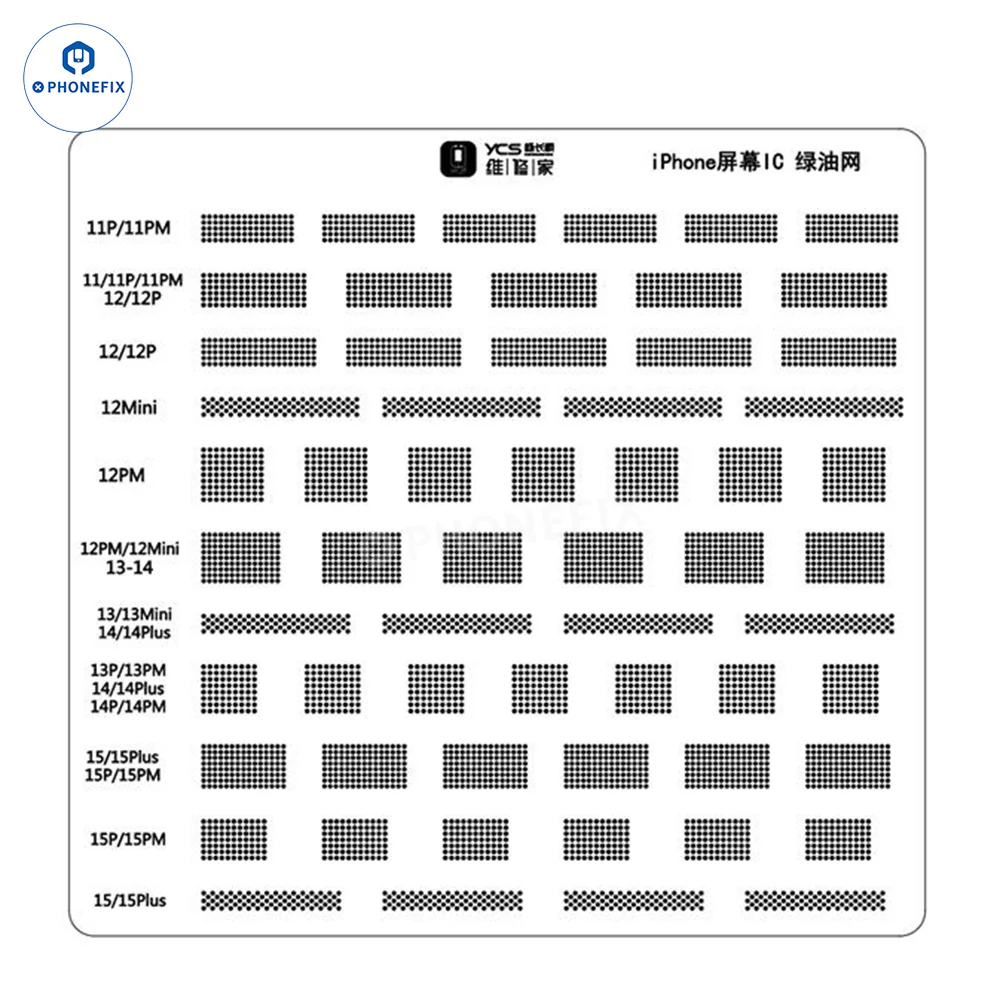
Modern mobile phone repair frequently involves chip-level motherboard issues—such as BGA failures, cold joints, and unsuccessful reballing attempts—where even slight chip misalignment can easily trigger malfunctions ranging from failure to boot to overheating or screen display anomalies. In the context of precision repair, the quality of the reballing stencil directly dictates the success rate of the soldering process. Full-metal stencils demonstrate superior stability during high-temperature reflow cycles; by minimizing the risk of deformation, they enhance solder joint consistency and are therefore widely utilized in professional chip re-soldering and rework procedures to boost overall repair reliability and success rates.
Preparedness (equipment, safety and work management)
Before starting any reballing treatment, it is important to have proper instructions for perfection. A technician will need to set up a hot air recovery station, usually set at 280°C to 330°C depending on the chip type, and a strong magnetic holder is critical to keeping a stencil tightly aligned with the chip throughout the solder paste application with good ESDIC-safe tweezers. It requires good flow at the side, preferably no smooth flow, as it leaves minimal residue and improves plume drift stability
A smooth operating environment also plays an important role in restoration accuracy. The motherboard should be placed on an ESD-safe mat with suitable lighting and magnification assistance. An alcohol cleaning cloth is required to remove old electrical residue and oxidation from the tile surfaces before the rewrapping begins. Technicians minimize routine cleaning, but at the same time, proper floor preparation best affects the maintenance of the solder and the final restoration.
Comprehensive treatment steps (tile removal, cleaning and re-routing procedures);
The first step in the restoration process is tile removal using a controlled hot air program. Depending on the thickness of the board and the chip size, the temperature should be carefully rounded between 320°C and 350°C. Thermal distribution is also essential to keep negative additives out of the environment. Micro-tipped ESD tweezers are used to gently lift the IC as soon as the solder melts. Excess power must be eliminated to save your pad loss.
After removal, the chip and motherboard area should be cleaned using flow and alcohol cleaners to ensure no oxidation or residue remains. This step is important because residual contaminants can target negative solder bonds. Once the all-steel solder stencil is cleaned, it is aligned on the chip with a strong magnetic holder that ensures proper positioning and then the solder paste is evenly implemented in all the stencil holes, observed through controlled heating, until the correct solder balls are sized and placed tridimensionally .
testing and verification (to ensure treatment success and stability)
After recirculation and reinstallation, the motherboard must go through a thorough inspection method. The microscope is used to confirm alignment, check flat solder joints or bridge issues. A continuity effort is also undertaken to ensure that all forces and lines of meaning are effectively linked. Once the device is installed, it is used for primary boot Look to verify basic functionality, which is display output, charging response, and device boot
Further verification involves checking the temperature balance where the device is found at normal working temperature conditions. If the soldering method is successful, the chip will maintain a consistent overall performance without overheating or accidental shutdowns. The technicians additionally conduct stress tests of the repaired motherboard to make certain long-term reliability and stability of the overall performance .
durability benchmarks and industry performance standards
When evaluating the gear used for reballing, the difference between an all-metal solder stencil and conventional nickel- or tin-based whole stencils will be very clean Standard stencils often deform during repeated heat treatment, leading to misalignment of the solder balls and poor satisfactory reconstruction. In contrast to metal-based total stencils maintain structural integrity even during high-temperature cycles, they make best for professional restoration environments This is particularly important in relation to tin plating stencils mobile repair consumer goods steel mesh deformation repair complete organizations where loss of accuracy can lead to rebuild failure.
Another major advantage of steel stencils is their long lifespan and resistance to bending. Unlike softer materials, they do not warp easily, even after continuous use in busy repair shops. Combined with a strong magnetic holder, they provide stable alignment throughout the process. Many technicians using DIYFIxtool tools report improved consistency and fewer errors when switching to steel mesh designs, especially in high-precision motherboard repair tasks.
Conclusion:
The selection of a reballing stencil directly impacts the yield rate and rework costs associated with motherboard repair; full-metal stencils, in particular, offer distinct advantages in terms of stability during chip-level reballing due to their high rigidity and heat resistance. When combined with magnetic fixtures and alcohol cleaning cloth, this approach enhances alignment precision and soldering consistency, thereby bolstering the long-term reliability of the motherboard. By utilizing high-quality tooling and adhering to standardized processes, professional repair facilities can significantly boost their first-pass repair success rates while simultaneously mitigating the risks associated with repeated rework.
