


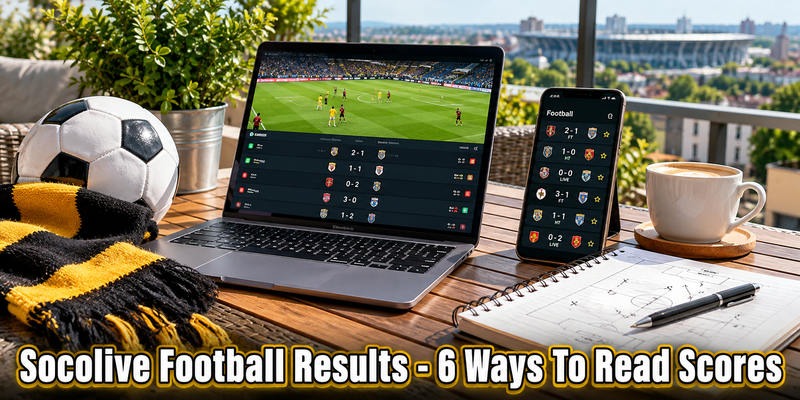
Socolive football results tell a story that goes beyond who won. Goals, times, cards, and context all sit in a single line, waiting for a careful reader. Socolive fans can use these 6 ways to read scores and follow their teams better.
What Socolive football results usually include
A results line packs many facts into a small space. Knowing each part helps you see the story without watching the highlights. These 6 elements appear in most Socolive football results.
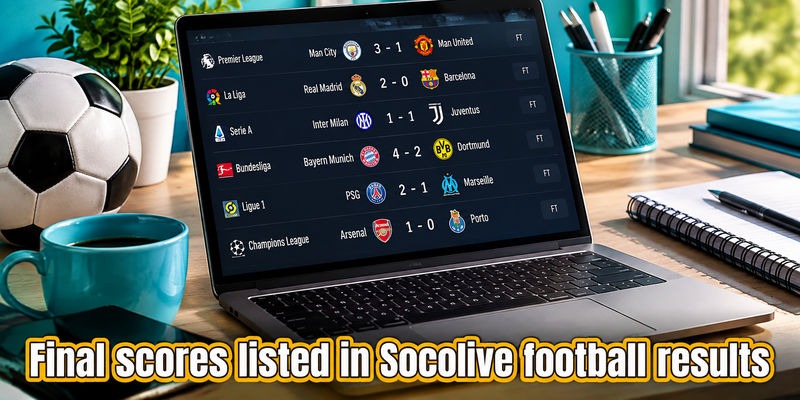
Final scores listed in Socolive football results
- Final scores: the headline number in Socolive football results shows who won, but remember that it only reflects the 90 minutes unless the competition says otherwise. Extra time and penalties may be noted separately. Cup competitions may add extra time or penalties to the line, so read the notes. A single glance at the status label often explains the final number.
- Goalscorers and times: the names and minutes reveal the shape of the match. Early goals suggest a fast start, while late goals point to drama and pressure. A late goal from a substitute suggests a bench that changes games. Names also help you spot who is in form this month. Scorers from midfield suggest strong attacking support.
- Cards and substitutions: red cards often explain strange swings, and early substitutions can signal injuries. Check these details before judging a team’s performance. A red card in the first half often reshapes the whole second half. Count bookings as well, since many yellows hint at a heated match. Fewer cards in a derby can be a surprise.
- Half time scores: compare the half time and final scores to see who finished stronger. A comeback hides in the gap between the two numbers, especially in Socolive football results. A 0 to 0 half with a 2 to 1 final suggests a game that opened up late. Notice how often your team scores after the break. A late equalizer can erase an entire half of work.
- Match status: labels such as finished, postponed, or abandoned affect how you read the line. A postponed game has no result yet, so avoid counting it in form tables. Rescheduled dates are worth saving, because they affect the fixture list. A quick note keeps your tracking accurate.
- Venue and competition: a league match, a cup tie. A friendly carry different weight. Note where the game was played, because home or neutral venues change what a result means. Neutral venues remove home advantage, so a draw means something different there. Check the competition name before comparing two results.
Reading a scoreline with context
A number alone can mislead. The same 1 to 0 can mean dominance or luck, depending on how the match unfolded. These 4 checks bring context to Socolive football results.
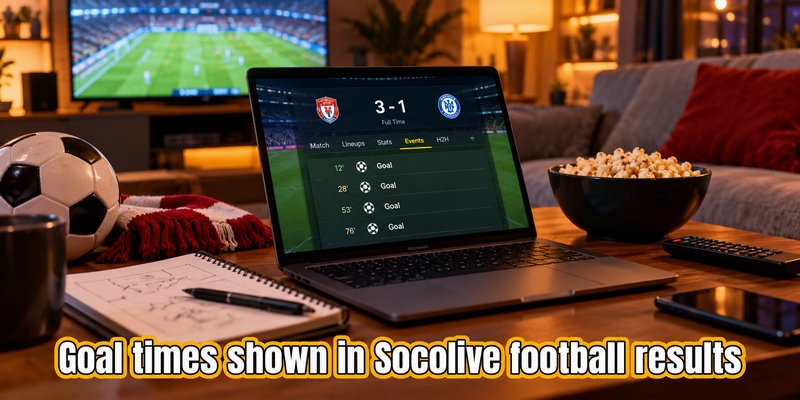
Goal times shown in Socolive football results
- Home versus away performance: a draw away from home against a strong side may be a good result, while the same draw at home may disappoint. Compare each score with the usual standard for that team and venue. Over a season, the pattern says more than any single line. Keep a short table for each team with home and away results side by side. A glance will show whether the gap is real. Away points in bad weather feel especially valuable.
- Goal difference significance: big wins and heavy defeats shape tables, so notice them. A 4 to 0 win lifts goal difference sharply, which can decide a title or a relegation spot. Use Socolive football results to track these swings across a month, not only a weekend. Small gaps decide tiebreakers more often than people expect. Track the numbers for your team after every round.
- Late goals and comebacks: a goal after minute 80 often changes the meaning of the match. Check the minute next to each goal, then ask whether the winner was leading for most of the game or only at the end. A team that scores late often has a strong bench or great fitness. Note how many points come from the final 10 minutes.
- Clean sheets and draws: a 0 to 0 draw suggests solid defense or poor attack, while a 3 to 3 draw suggests the opposite. Look at both sides of a draw before deciding what it means for form. A string of clean sheets points to a strong back line, but it may also mean low scoring games. Check the goals scored before drawing a conclusion.
Using Socolive football results to follow your team
Following one team becomes easier when you track results with a plan. A short routine after each match builds a clear picture over time. These 3 habits help you use Socolive football results well.
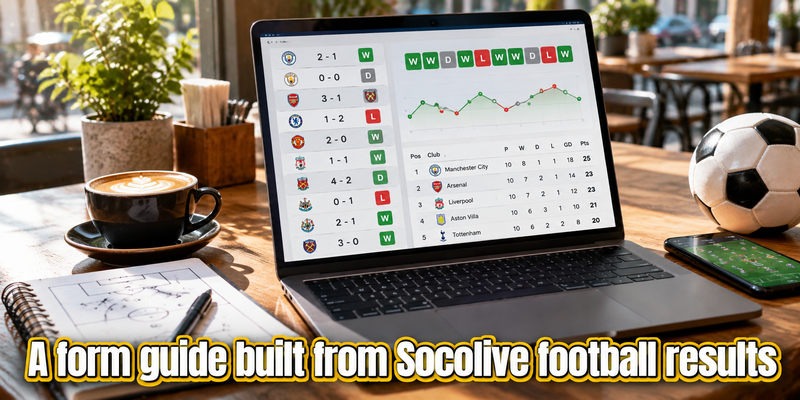
A form guide built from Socolive football results
Tracking a run of form
Write down the last 6 results in a row, using W, D, and L. Add the score and the opponent. After a month the pattern shows whether the team is rising, steady, or slipping. Compare it with the league table, since form can run ahead of position. A simple note on your phone is enough. It makes every new match easier to place in context for Socolive football results. Use colors if you like, green for wins plus red for losses. A glance then tells the story of the month. Review it every Sunday for a calm weekly check.
Spotting patterns home and away
Split your notes into home and away. Many teams show a clear gap, with strong results at home and cautious ones away. Look at goals scored and conceded in each group, then think about what the coach prioritizes. Knowing the split helps you anticipate how a team might approach the next fixture. Add a line for goals scored plus conceded in each group. A pattern of cautious away games often hints at a clear plan. Update the split after each round.
Preparing for the next fixture
Before the next match, review the last 3 results and the goalscorers. Check for injuries and suspensions that might change the lineup. Note the opponent’s recent form too. This preparation of 10 minutes makes the next kickoff more interesting. It gives you talking points for friends who follow the same team. Read the previous meeting between the two teams for extra context. A short note with what to watch makes viewing richer. Share your notes with a friend who follows the same team.
Conclusion
Socolive football results become far more useful when you read the details behind each score. Pick your favorite team, record the last 6 results, and watch the pattern appear. For a quick place to check scores after every game, Kết Quả Bóng Đá Socolive keeps the latest listings close. Start your form notes tonight.
