


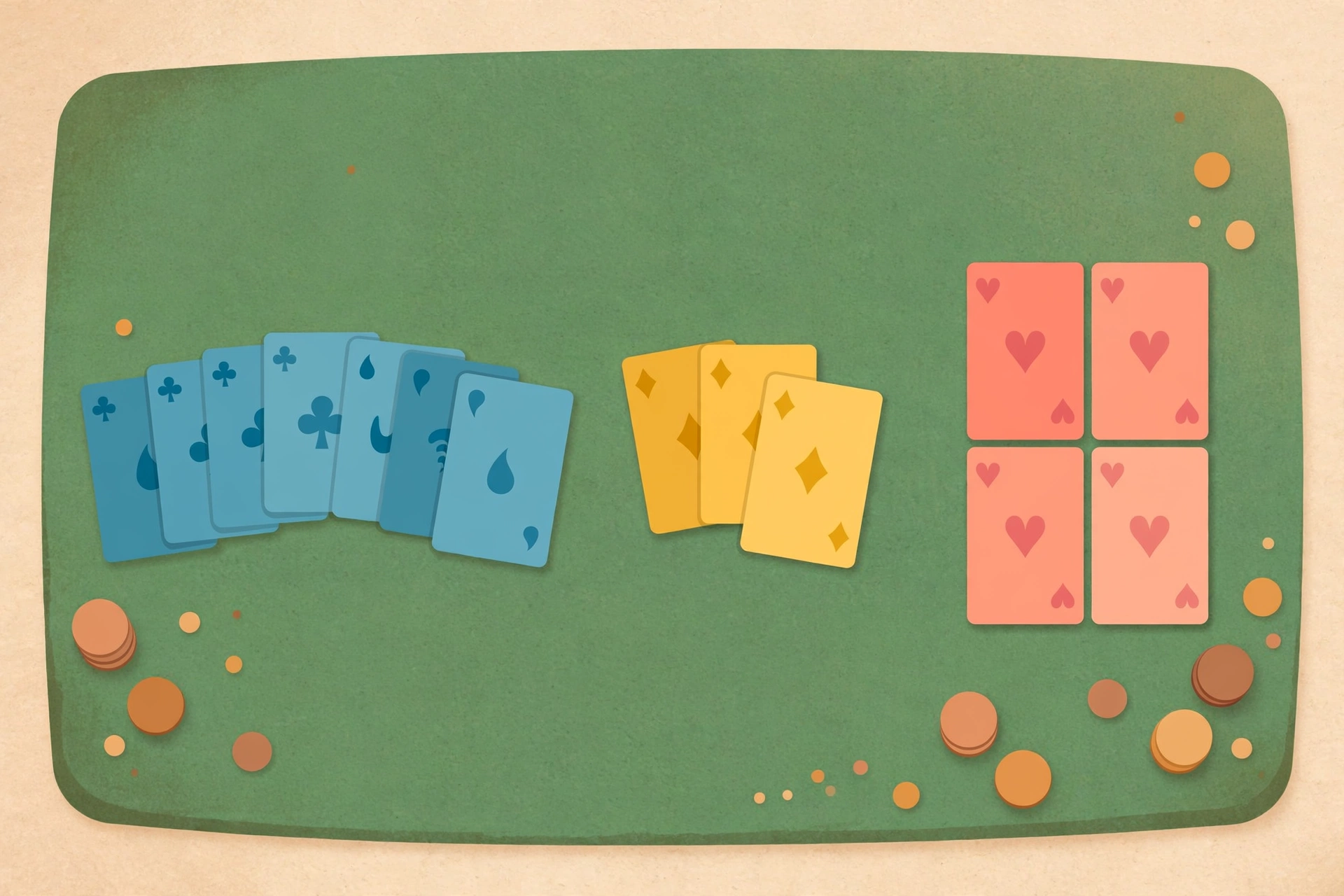
Rummy looks simple from the outside: thirteen cards, a few sequences, and a race to declare. But anyone who has played online for more than a week knows the format you choose changes the game completely. Points rummy, pool rummy and deals rummy all follow the same basic rules, yet they differ in scoring, duration, pressure and the kind of player they reward. Picking the right one is the difference between a relaxing ten-minute break and a tense strategic battle.
Points Rummy: The Sprint Format
Points rummy is the fastest and most flexible of the three. Each game is a single deal: every player starts with thirteen cards, the loser pays points based on the value of their unmatched cards, and each point carries a fixed rupee value decided before the game begins. When the hand ends, so does the commitment. There is no elimination and no waiting for a series to finish.
This format suits players who want short, sharp sessions. A single game can wrap up in a couple of minutes, which makes it ideal for a quick break or for practising new strategies without risking a long losing streak. Because every hand is independent, one bad deal does not haunt you — you simply move on to the next. The trade-off is volatility: winnings and losses swing quickly, so disciplined bankroll management matters from the very first card.
Pool Rummy: The Survival Game
Pool rummy adds an elimination twist. Players contribute to a prize pool and receive a fixed number of points — commonly 101 or 201. Each deal, the losers accumulate points, and anyone whose total crosses the pool limit is knocked out. The last player standing takes the pool.
This structure rewards patience and consistency rather than single-hand brilliance. You can afford to play cautiously, drop early from bad hands, and protect your score while more aggressive opponents burn through their points. Pool rummy suits players who enjoy longer sessions and a tournament feel without committing to a fixed number of deals. The downside is time: a full pool game can run considerably longer than a points match, and early elimination after one disastrous hand is always possible if you play recklessly in the opening deals.
Deals Rummy: The Best-of Series
Deals rummy sits between the other two. Players agree in advance on a set number of deals — two, three, four or six — and everyone receives an equal stack of chips. At the end of each deal, the winner takes chips from the losers based on their scores. When all the deals are done, the player holding the most chips wins.
Because the number of deals is fixed, deals rummy suits players who like a defined contest with room for a comeback. Falling behind in the first deal is not fatal; steady play across the series can still carry you to the top. It is a natural fit for friends who want a structured match, and for learners who want repeated hands against the same opponents to read their habits. Many players exploring formats on platforms such as Love Rummy find deals rummy the best middle ground between the speed of points play and the endurance test of a pool game.
Which One Should You Choose?
Match the format to your schedule and temperament. Choose points rummy if you have a few minutes and want instant results, or if you are learning the game and want low-commitment practice. Choose pool rummy if you enjoy survival dynamics, longer sessions and the satisfaction of outlasting the table. Choose deals rummy if you want a balanced, series-based contest where one bad hand does not decide everything.
Whichever format you pick, the fundamentals stay the same: build a pure sequence early, watch the discard pile, and know when to drop. Master those habits, and every format becomes easier — the only question left is how long you want the contest to last.
