


Fusion energy has been “thirty years away” for half a century, but the joke is wearing thin. Private investment has poured into dozens of startups, national laboratories keep setting records for sustained plasma and net energy gain, and for the first time serious people are publishing construction timelines instead of physics dreams.
The public giants still matter
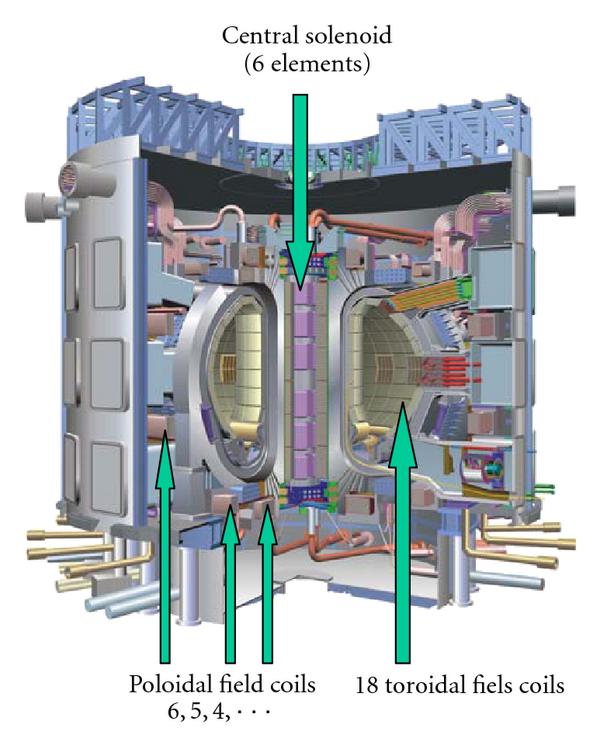
ITER, the vast international tokamak rising in France, remains the field’s centrepiece despite delays and cost growth; its deuterium-tritium experiments later this decade will test reactor-scale physics no startup can yet attempt. China’s EAST and Korea’s KSTAR machines keep extending plasma-duration records, and Britain, Japan and the US all run national programmes. The private race is fast partly because it stands on this public foundation.
Project updates come from ITER and national programmes coordinated by the US Department of Energy.
Money, grids and honest timelines
Investors have committed billions, but fusion’s real competitor is not scepticism — it is the falling cost of solar, wind and batteries. A fusion plant that arrives in 2035 must beat the grid of 2035, not of today. Where fusion may win regardless: dense, dispatchable, land-light power for industry and cities. Most credible roadmaps now target pilot plants producing electricity in the early-to-mid 2030s, with commercial fleets a decade behind.
How scientists know this
Findings of this kind are not single-experiment stories. They rest on converging lines of evidence — instrument records, replication by independent groups, and models tested against observations — assembled over years and argued over in the literature. Where uncertainty remains, it is usually about magnitude and timing rather than direction. That distinction matters for how the rest of us should hold the news: not as a coin flip between true and false, but as a picture sharpening at different speeds in different places.
What success would mean
A working fusion industry would settle several arguments at once: near-limitless fuel from seawater, no long-lived waste of the fission kind, no carbon emissions, and energy security for any nation that can build the plants. It would not arrive in time to do the heavy lifting of the 2030s climate targets — but for the century beyond, it could be the backbone everything else plugs into.
For more coverage of the stories shaping the day, visit our home page and the latest in news.
Why it is so hard
Fusion asks engineers to hold gas hotter than the sun’s core in a magnetic bottle, extract useful energy from it, and do so with materials that survive years of neutron bombardment. Each requirement alone is a career’s work. The fundamental physics is proven — stars do it, and experiments have produced net energy gain in the fuel itself. The remaining problems are engineering and economics, which are slower, less glamorous, and absolutely decisive.
Magnets changed the game
The recent acceleration has a specific cause: high-temperature superconducting magnets. Built from rare-earth barium copper oxide tape, they generate far stronger fields than older superconductors, and stronger fields shrink everything — a compact reactor can reach conditions that once demanded a machine the size of a cathedral. That size collapse is what let startups credibly promise demonstration plants this decade rather than next.
Why this research matters beyond the lab
Basic research has a habit of becoming infrastructure. Measurements taken to answer a scientific question end up guiding engineering standards, insurance models, public investment and school textbooks. The lag can be decades, which is precisely why the funding and the observing systems behind work like this are worth defending in the present: the data not gathered this year is the question nobody can answer in twenty. Curiosity may start the work, but societies finish it — or fail to — with budgets.
Fusion has taught generations to discount its promises. The magnets, money and milestones of the last five years suggest the discount should at least shrink. The decade of proof is underway.
