


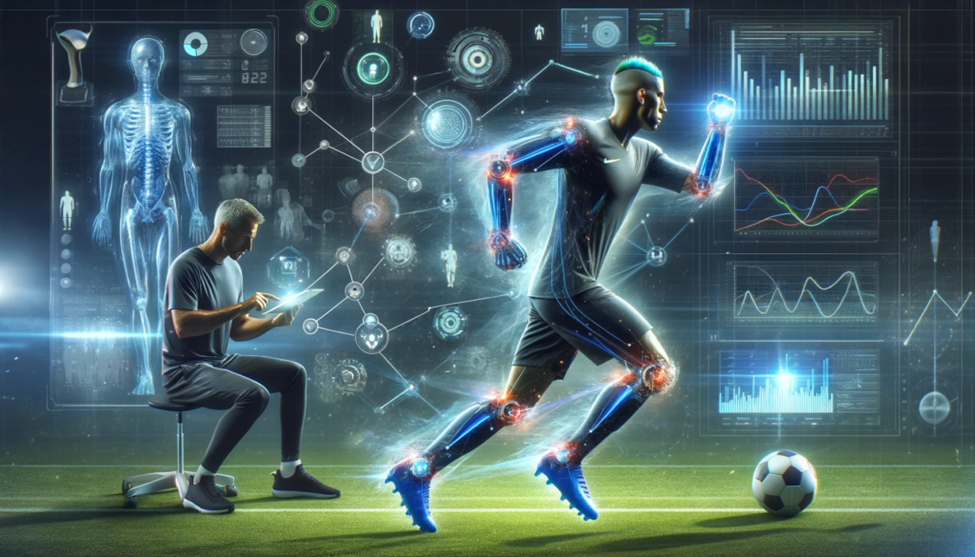
Sports move fast. Players change form, conditions shift, and momentum swings without warning. Human intuition struggles to keep track of all these variables at once. AI and machine learning step in to handle this complexity. They read patterns in massive datasets, update predictions as new information arrives, and remove emotional bias. Their goal is not certainty. Their goal is clarity—showing the most likely outcome based on real evidence.
Modern prediction systems do not rely on guesswork. They rely on structured inputs, trained models, and continuous feedback. This article explains what those models do, how they learn, and why they sometimes outperform human judgment.
How Machine Learning Models Read And Learn From Data
Machine learning works by finding patterns that humans overlook. It studies thousands of past games, identifies relationships between variables, and uses those relationships to predict future outcomes. The model improves as it sees more data. It trims noise, spots trends, and sharpens its internal logic.
Structured Data Creates A Clear Starting Point
Models read numbers first. They track goals, possessions, fouls, speeds, injuries, and substitutions. Each variable adds context. Together, they form a detailed picture of how a team performs.
Feature Selection Highlights What Truly Matters
Not every stat influences the result. Machine learning finds the variables that matter most. For example, passing accuracy may matter more than total passes. The model ranks features by importance and focuses on the strongest signals.
Historical Patterns Reveal Hidden Trends
Models learn from thousands of past matches. They see patterns unfold slowly—patterns too subtle for humans to track. That same logic applies in other prediction systems, even simple ones people ask about, such as how do bets work in roulette. The underlying idea is the same: probability depends on repeated patterns, not isolated moments.
Training And Feedback Improve Accuracy
When real results arrive, the model checks its prediction. If it was wrong, it adjusts its internal weights. This cycle repeats until the model produces stable and reliable forecasts.
Machine learning does not replace judgment. It strengthens it. It shows how real patterns behave across time, not just in a single match.
Why Live Data Makes Predictions More Accurate
Machine learning improves when it receives new information in real time. Live data adds context that static datasets cannot capture. It reflects the shifting pace of the match and the changing condition of each player. These updates give prediction models the ability to adjust, refine, and respond as the game unfolds.
Momentum Changes Influence Probability
A team may start slow but build pressure. Live possession swings, shot attempts, and movement speeds reveal which side controls the pace. Models adjust predictions when these values shift.
Player Condition Affects Outcomes
Injuries, substitutions, and fatigue alter team strength. Real-time data shows how each change affects performance. When a key player slows down, the model updates its expectation.
Weather And Field Conditions Matter
Rain, wind, and poor turf change how teams play. Live environmental readings allow the model to factor these conditions into its calculations.
Referee Decisions Shape The Flow
Cards, penalties, and stoppages have immediate effects. Models recalculate when momentum breaks or when one team gains a numerical advantage.
Live Feeds Reduce Lag Between Action And Insight
The shorter the delay, the more accurate the prediction. Fast data keeps the model aligned with reality instead of outdated assumptions.
Real-time inputs make machine learning feel responsive. They allow predictions to move with the match, not behind it.
What AI Actually Predicts — And What It Cannot
AI does not predict the future with certainty. It estimates likelihood based on patterns, numbers, and trends. Its strength lies in probability, not prophecy. Understanding what AI can and cannot do helps clarify its role in sports forecasting.
AI Predicts Patterns, Not Moments
It can estimate which team is more likely to win based on form and stats. It cannot foresee a sudden mistake, a rare shot, or a one-in-a-million bounce.
AI Handles Large Data Better Than Humans
It processes thousands of inputs at once. It tracks correlations across seasons, tournaments, and player histories. It uses this scale to find the most probable outcome.
AI Cannot Read Emotion
Motivation, pressure, and morale influence performance, but they do not appear cleanly in data. Models approximate these effects through indirect signals, but they cannot measure them directly.
AI Cannot Replace Game Knowledge
Experts know context that numbers miss—rivalries, style clashes, or a team’s psychological edge. AI complements this knowledge but cannot replicate it.
AI Does Not Understand Meaning
It does not know why a strategy works. It only knows that it often leads to a certain result.
AI strengthens decision-making by showing where probability leans. It does not eliminate uncertainty. It clarifies it.
The Algorithms Behind Sports Predictions
Machine learning uses several algorithm types to analyze sports data. Each algorithm reads patterns differently. Together, they form a toolkit that handles complex relationships between variables.
Regression Models Estimate Probabilities
Linear and logistic regression identify how strongly each factor influences an outcome. They show how changes in possession, form, or scoring rates shift the probability of winning.
Decision Trees Break Choices Into Clear Steps
A decision tree follows simple rules: if this happens, then that becomes likely. It builds a logical path from conditions to outcomes. Trees handle messy, non-linear data well.
Random Forests Improve Stability
A random forest combines many decision trees. Each tree gives its opinion. The forest averages them. This method reduces errors and avoids overfitting.
Neural Networks Detect Deep, Hidden Patterns
Neural networks learn complex relationships that traditional models miss. They analyze interactions between variables—such as how teamwork, momentum, and match context combine to create advantage.
Time-Series Models Track Trends Over Time
ARIMA and LSTM models follow patterns across matches and seasons. They detect long-term improvements or declines that influence outcomes more than single-game events.
Different algorithms work best for different types of sports. Fast, continuous games need models that detect pace. Turn-based sports need models that weigh discrete events. The strength lies in choosing the right tool for the right problem.
AI and machine learning bring structure to a world defined by uncertainty. They read data at a scale no person can match. They track patterns across seasons, detect shifts in momentum, and adjust predictions as new information arrives. Their purpose is not to guarantee outcomes. Their purpose is to show where probability leans and why.
These systems work because they combine algorithms, live inputs, and continuous feedback. They learn from past games, adapt to current conditions, and refine their models over time. They remove bias, highlight meaningful variables, and reveal patterns that remain invisible to the human eye.
Sports remain unpredictable. A single moment can overturn every forecast. AI does not erase that uncertainty. Instead, it explains it. It shows how trends form, how they break, and how data shapes the most likely result. In doing so, it transforms intuition into informed judgment—and turns prediction into a clearer, more disciplined process.