


Every successful business you admire today once started as an idea. But for every idea that turns into a thriving company, many more quietly fail not because they lacked passion, but because they lacked proof. Proof that customers would pay, that costs made sense, and that the market was ready.
Before real momentum builds, successful founders pause to test their assumptions against reality. They look for data, not just encouragement, signals that demand exists, pricing is sustainable, and growth won’t collapse under its own weight. This is where commercial feasibility studies services quietly shape outcomes, turning early questions into informed decisions and helping ideas earn the confidence of investors, partners, and the market itself.
Commercial viability isn’t about optimism or intuition. It’s about clarity. This practical feasibility checklist walks you through the real questions your business idea must answer before time, money, and energy are committed.
The Reality Behind a “Great Idea”
At first, every idea feels promising. Friends say it sounds exciting. Family encourages you to try. But commercial reality is often less forgiving.
A viable idea must survive outside conversations and pitch decks. It must perform in real conditions real customers, real competitors, real pricing pressure. This is where commercial feasibility becomes essential.
Feasibility isn’t about discouraging entrepreneurs. It’s about protecting them.
What Commercial Viability Really Means
Commercial viability answers one core question: Can this idea work as a business in the real market?
It considers:
- Whether there is genuine demand
- Whether customers will pay at sustainable price points
- Whether costs and margins are realistic
- Whether the idea can survive competition and scale over time
Unlike financial projections that often rely on assumptions, feasibility tests those assumptions against market behavior.
A Practical Commercial Feasibility Checklist
1. Is the Problem Real and Urgent?
Every viable business solves a problem. But not every problem is strong enough to build a business around.
Ask yourself:
- Who experiences this problem regularly?
- How are they solving it today?
- What happens if the problem remains unsolved?
If customers are already spending time or money to fix the issue, you’re on stronger ground. If the problem is theoretical or “nice to have,” viability becomes much harder.
2. Is There a Clearly Defined Target Market?
A common mistake is trying to appeal to everyone. Commercially viable ideas know exactly who they serve.
A clear market definition includes:
- Industry or customer segment
- Geography
- Buying behavior and decision-making patterns
- Willingness to pay
The narrower and clearer the audience, the easier it becomes to validate demand and design a realistic go-to-market plan.
3. Will Customers Actually Pay Your Price?
Interest doesn’t equal revenue. Many ideas fail because pricing is based on hope rather than evidence.
You must understand:
- What customers pay today for alternatives
- How price-sensitive your target market is
- Whether your value justifies a premium or requires a discount
Pricing that looks good on spreadsheets but fails in the market is a major red flag.
4. Do the Numbers Work in the Real World?
A feasible business doesn’t just generate revenue, it does so sustainably.
This step looks beyond surface-level projections and asks:
- What are the fixed and variable costs?
- How long before the business breaks even?
- How sensitive is profitability to changes in demand or pricing?
This is where structured commercial feasibility studies services help replace guesswork with evidence-based modeling.
5. Can the Business Operate at Scale?
Some ideas work beautifully at a small level but break when demand grows.
Consider:
- Can operations handle increased volume?
- Are systems, suppliers, and talent scalable?
- Does growth improve margins or create pressure?
Scalability separates lifestyle projects from growth-ready businesses.
6. How Competitive Is the Market?
Competition validates demand, but it also challenges entry.
A proper feasibility review examines:
- Existing competitors and substitutes
- Barriers to entry
- Customer switching costs
- Your ability to differentiate meaningfully
The goal isn’t to eliminate competition, it’s to understand how you can win despite it.
7. Are There Hidden Risks?
Every market has risks. What matters is knowing them early.
Key areas include:
- Regulatory or compliance requirements
- Supply chain dependencies
- Technology limitations
- Market volatility
Identifying risks upfront allows founders and leaders to build mitigation strategies rather than react under pressure.
Why Internal Validation Is Often Not Enough
Founders are emotionally invested in their ideas. That passion fuels innovation but it can also cloud judgment.
Independent feasibility study consultants bring objectivity. They challenge assumptions, test logic, and validate ideas without emotional bias. This outside perspective often reveals gaps that internal teams overlook.
Feasibility isn’t about approval, it’s about preparedness.
When Feasibility Reveals the Need for Restructuring
Sometimes, the idea is strong but the structure isn’t.
Commercial feasibility may reveal:
- Cost structures that need redesign
- Business models that require adjustment
- Markets that need repositioning
- Operations that need simplification
In such cases, guidance from the best restructuring consulting firms helps realign the business for viability instead of abandoning the idea entirely.
Feasibility as a Decision-Making Tool, Not a Roadblock
A feasibility study doesn’t always say “go.” Sometimes it says “pause,” “refine,” or “pivot.”
And that’s a success.
It’s far better to adjust early than to discover flaws after capital is spent, teams are hired, and reputations are on the line.
Commercial feasibility empowers better decisions not safer ones.
Final Thoughts
A commercially viable business isn’t built on hope. It’s built on understanding of the market, the customer, the costs, and the risks.
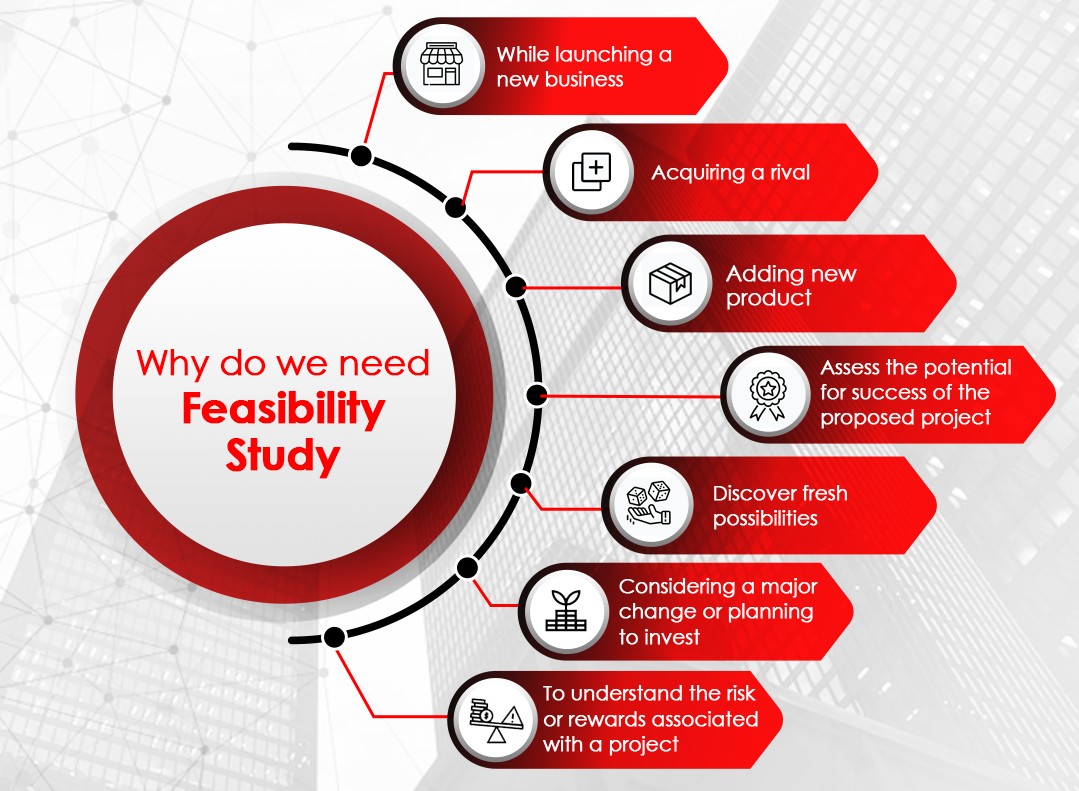
Before launching, expanding, or pitching, ask whether your idea has passed the feasibility checklist. The answers you uncover may save years of effort or unlock opportunities you hadn’t seen before.
For businesses seeking structured insight and objective evaluation, Brava Consultancy offers a balanced blend of strategic thinking and practical execution. The firm works closely with founders and leadership teams to assess market demand, operational readiness, and growth potential with clarity and precision. By combining data-driven analysis with real-world business insight, it helps organizations make confident, informed decisions. Its approach aligns closely with what businesses expect from trusted feasibility study consultants when navigating critical growth or launch phases.