


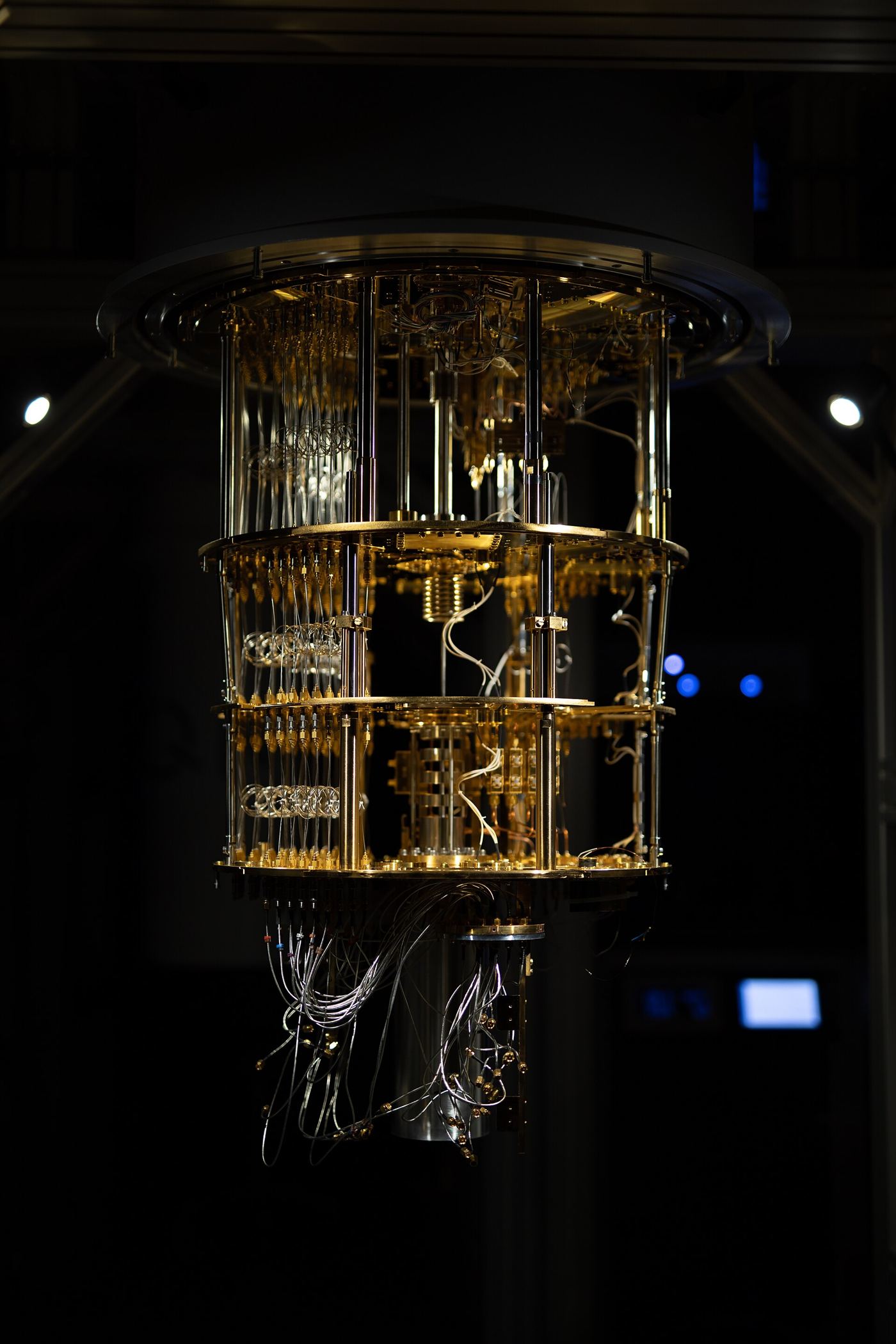
Quantum computing has lived for years in the future tense — revolutionary, imminent, and somehow always a decade away. Recently, though, the field’s results have changed character. Instead of laboratory curiosities, researchers have delivered error-corrected systems that improve as they scale, and industrial users have run pilots on problems drawn from chemistry, logistics and materials. It does not make quantum computers ready to replace anything yet. It does make this their most practical year so far.
The error problem is cracking
Quantum bits, or qubits, are fragile: heat, vibration and stray electromagnetic noise corrupt their calculations constantly. The field’s central challenge has been error correction — combining many physical qubits into ‘logical’ qubits stable enough for useful work. Recent demonstrations, reported in venues such as Nature, have shown systems crossing the threshold where adding more qubits reduces errors instead of adding to them. That threshold is the difference between a science experiment and an engineering roadmap.
On notontech.com our science desk emphasises what this milestone is not: it is not a machine that breaks modern encryption or designs drugs overnight. Logical qubit counts remain small, and useful problems need thousands. But every previous computing technology scaled once its error problem yielded, and the trajectory — not the snapshot — is what has changed.
Industry moves from watching to testing
Pharmaceutical, automotive and finance firms now run structured pilot programmes, identifying the narrow problems — molecular simulation, battery chemistry, optimisation — where quantum methods might beat the best classical supercomputers. Cloud access means they can experiment without buying a dilution refrigerator. Our Science coverage notes the honesty in these pilots: teams publish null results as readily as breakthroughs, a sign of a field maturing past its hype phase.
What it means for everyone else
Two practical consequences deserve attention. First, cryptography: standards bodies have already published post-quantum encryption standards, and organisations holding long-lived secrets are beginning the slow migration — not because quantum attacks are imminent, but because data harvested today could be decrypted later. Second, investment in quantum skills and supply chains is concentrating in a handful of countries, a strategic pattern resembling the semiconductor story.
The quantum future is still future. But the distance is now measured in engineering milestones that keep being met, rather than in hopes. That is what a technology growing up looks like.
The talent and supply chain race
Beneath the physics runs an industrial contest. Quantum computers need exotic components — dilution refrigerators, specialised lasers, isotopically pure materials — supplied by a handful of firms, and they need people even scarcer than the hardware: engineers fluent in both quantum theory and classical control systems. Universities are responding with dedicated programmes; governments are treating quantum capability as strategic infrastructure, funding national labs and restricting some exports. The pattern will be familiar to anyone who watched semiconductors become geopolitics. The practical year, in other words, is also the year the race became openly national — which historically is when technologies start moving very fast indeed, and when the rest of us should start paying close attention.
