


Sustainable business growth depends on understanding customers, identifying market opportunities, and making informed decisions about products, services, and marketing. Organizations that rely only on assumptions may invest in ideas that do not match customer needs or overlook changes in purchasing behavior.
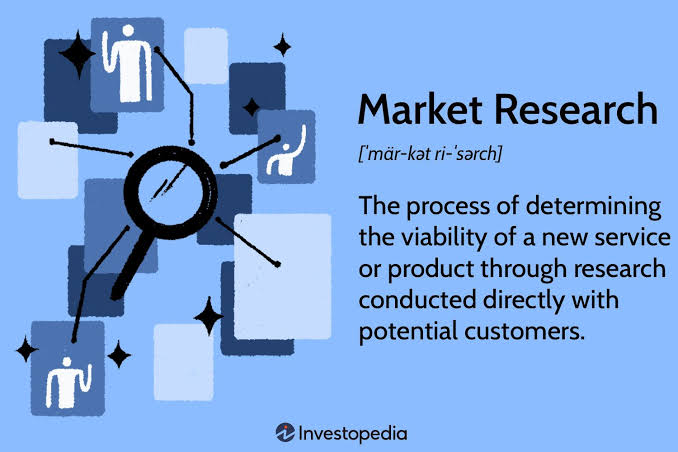
Market research provides evidence that can help businesses evaluate opportunities and reduce uncertainty. A research marketplace can support this process by helping research teams access survey participants and organize the collection of information from relevant audiences.
PureSpectrum, through purespectrum.com, provides marketplace-based research technology designed to support audience sourcing and survey management. Understanding how these services contribute to business decisions can help organizations determine where research fits within their growth strategy.
Understanding Customer Needs
Customer needs influence product selection, satisfaction, loyalty, and willingness to pay. Businesses that understand these needs are better positioned to develop relevant offerings and communicate their benefits effectively.
Research can reveal what customers value most, which problems they experience, and what prevents them from choosing a particular product or service.
For example, a small business may assume customers prioritize low prices, but research might reveal that convenience and dependable support are more important. A software provider may discover that customers want a simpler onboarding process rather than additional features.
These findings can help organizations focus their resources on improvements that address genuine customer concerns.
Businesses should combine survey findings with customer feedback and behavioral information where appropriate. This provides a broader perspective than relying on any single source of evidence.
Identifying New Market Opportunities
Growth often requires reaching new customers, entering new regions, or introducing additional products.
Market research can help businesses evaluate whether a potential opportunity deserves further investment. Studies may examine customer demand, category awareness, competitor offerings, purchasing habits, and unmet needs.
For example, a company considering international expansion may investigate whether its product addresses a relevant need in the target market and how consumers perceive existing alternatives.
Research can also reveal differences between customer segments. One group may value affordability, while another places greater importance on quality, convenience, or specialized features.
These insights can guide market selection and positioning. However, consumer research should be combined with financial forecasting, operational planning, and regulatory analysis before major investments are made.
Supporting Better Product Development
Products are more likely to meet customer expectations when development decisions are informed by evidence.
Research can help businesses evaluate concepts, compare features, test product descriptions, and identify usability problems before a launch.
Early concept testing may reveal that customers misunderstand a proposed product or prefer a different combination of features. Post-launch research can then measure satisfaction and identify opportunities for refinement.
These findings can reduce the risk of spending resources on features that customers do not value.
However, research participants may express interest in ideas they would not ultimately purchase. Businesses should therefore consider willingness to pay, product feasibility, competitive conditions, and actual behavior alongside stated preferences.
Improving Marketing Effectiveness
Marketing supports growth by helping businesses reach potential customers and communicate why their offerings are relevant.
Research can reveal whether consumers recognize a brand, understand its benefits, and consider it when making purchasing decisions.
If awareness is low, the company may need to improve its reach among relevant audiences. If awareness is high but consideration is weak, the business may need to investigate price perceptions, trust, product relevance, or differentiation.
These findings help marketing teams choose more appropriate strategies rather than increasing spending without understanding the underlying problem.
Research can also help test alternative messages and creative concepts before a campaign is launched. Follow-up studies can evaluate whether the intended change occurred, although other market factors should be considered when interpreting results.
Strengthening Competitive Positioning
Businesses operate in environments where customers compare products and services before making decisions. Understanding these comparisons can reveal ways to strengthen competitive positioning.
Research may show which attributes customers associate with different brands, how they evaluate product quality, and what influences their final choices.
A company might discover that competitors are perceived as affordable but less dependable. Another business may find that customers value its quality but do not understand its advantages.
These insights can inform product improvements and communication strategies.
The objective should be meaningful differentiation rather than simply copying competitors. Businesses need to identify advantages that matter to customers and that they can consistently deliver.
Competitive research should also focus on relevant alternatives rather than comparing a business with companies that serve substantially different markets.
Improving Customer Retention
Acquiring new customers is only one part of growth. Businesses also need to understand why customers remain loyal, reduce their usage, or switch to competitors.
Research can investigate satisfaction, service quality, perceived value, trust, and reasons for leaving.
For example, customers may appreciate a product but become dissatisfied with slow support or confusing billing. Identifying these problems gives the organization an opportunity to address them.
Companies should distinguish between satisfaction and loyalty. A customer may report a positive experience but still switch because of pricing, convenience, or a competing offer.
Combining survey feedback with repeat-purchase, renewal, and support data can help organizations understand retention more effectively.
Follow-up measurement can then evaluate whether improvements have strengthened customer relationships.
Supporting More Effective Resource Allocation
Businesses have limited time and budgets. Research can help decision-makers identify which opportunities deserve attention and which assumptions require further testing.
A company may discover that one audience segment has strong purchase interest while another shows limited demand. This information can guide marketing priorities and product development.
Similarly, research may reveal that an expensive product feature is not important to most customers, allowing the business to reconsider its investment.
These decisions should not be based on survey results alone. Financial projections, operational constraints, competitive conditions, and strategic objectives also matter.
A structured decision process combines customer evidence with business analysis and evaluates the risks associated with each option.
Expanding Into New Geographic Markets
International growth introduces additional questions about customer preferences, pricing, language, competition, and purchasing behavior.
Research can help businesses understand whether their existing products and messages are appropriate for a new market or require adaptation.
A study might reveal that customers in one region prioritize affordability while customers elsewhere place greater emphasis on service or premium features.
Research teams need to consider language and cultural differences when designing surveys. Questions should be translated and adapted carefully so that responses remain meaningful across markets.
A marketplace that provides access to multiple countries can help organizations source participants for international studies. Businesses should still evaluate the feasibility of each audience and determine whether the samples support the intended comparisons.
Making Research More Efficient
Business growth often requires faster decision-making. Research teams may need to evaluate several opportunities while working within limited budgets and deadlines.
Marketplace-based services can help simplify parts of the data collection process by coordinating access to survey participants and providing tools for managing projects.
Depending on the platform, researchers may be able to define audiences, manage quotas, monitor progress, and review project information through a centralized interface.
PureSpectrum’s marketplace is designed to support audience sourcing and survey workflows. Organizations considering purespectrum.com should assess its current features, quality controls, and service options to determine whether they fit their needs.
Efficiency should be measured by the usefulness of the final research, not simply by how quickly a survey is completed.
Building a Continuous Learning Process
Research delivers more lasting value when it becomes part of regular business planning.
Organizations can establish a process of identifying questions, collecting evidence, evaluating findings, implementing changes, and measuring results.
For example, a company may use research to identify customer concerns, introduce a service improvement, and conduct a follow-up study to assess whether perceptions changed.
Teams should document what they learned and communicate relevant findings across marketing, product development, sales, and customer service.
This approach helps prevent the same questions from being investigated repeatedly without progress. It also encourages employees to challenge assumptions and use evidence when evaluating new ideas.
Measuring the Business Impact of Research
Businesses should evaluate whether research investments contribute to better decisions and measurable improvements.
Possible indicators include improved customer satisfaction, stronger purchase consideration, more effective product launches, reduced customer complaints, or better retention.
Not every improvement can be attributed directly to research. Market conditions, competitive activity, and operational changes may also influence outcomes.
Organizations should therefore avoid claiming that a research project caused a specific commercial result unless the evidence supports that conclusion.
Instead, they can document how findings informed decisions and evaluate whether the resulting actions achieved their objectives.
This creates a clearer understanding of how research supports business performance over time.
Conclusion
Research marketplace services can support business growth by helping organizations understand customers, evaluate opportunities, improve products, strengthen marketing, and make more informed strategic decisions.
The most effective approach begins with clear questions and appropriate audiences, then connects reliable findings with practical action. Businesses should also evaluate data quality, privacy, and research limitations to ensure that conclusions are supported by evidence.
Organizations exploring purespectrum.com can review its marketplace services and determine whether they suit their research objectives and operational needs.
